Предмет: Английский язык,
автор: 09765467
плииз, помогите!! С заданием по-английскому
Приложения:
Ответы
Автор ответа:
1
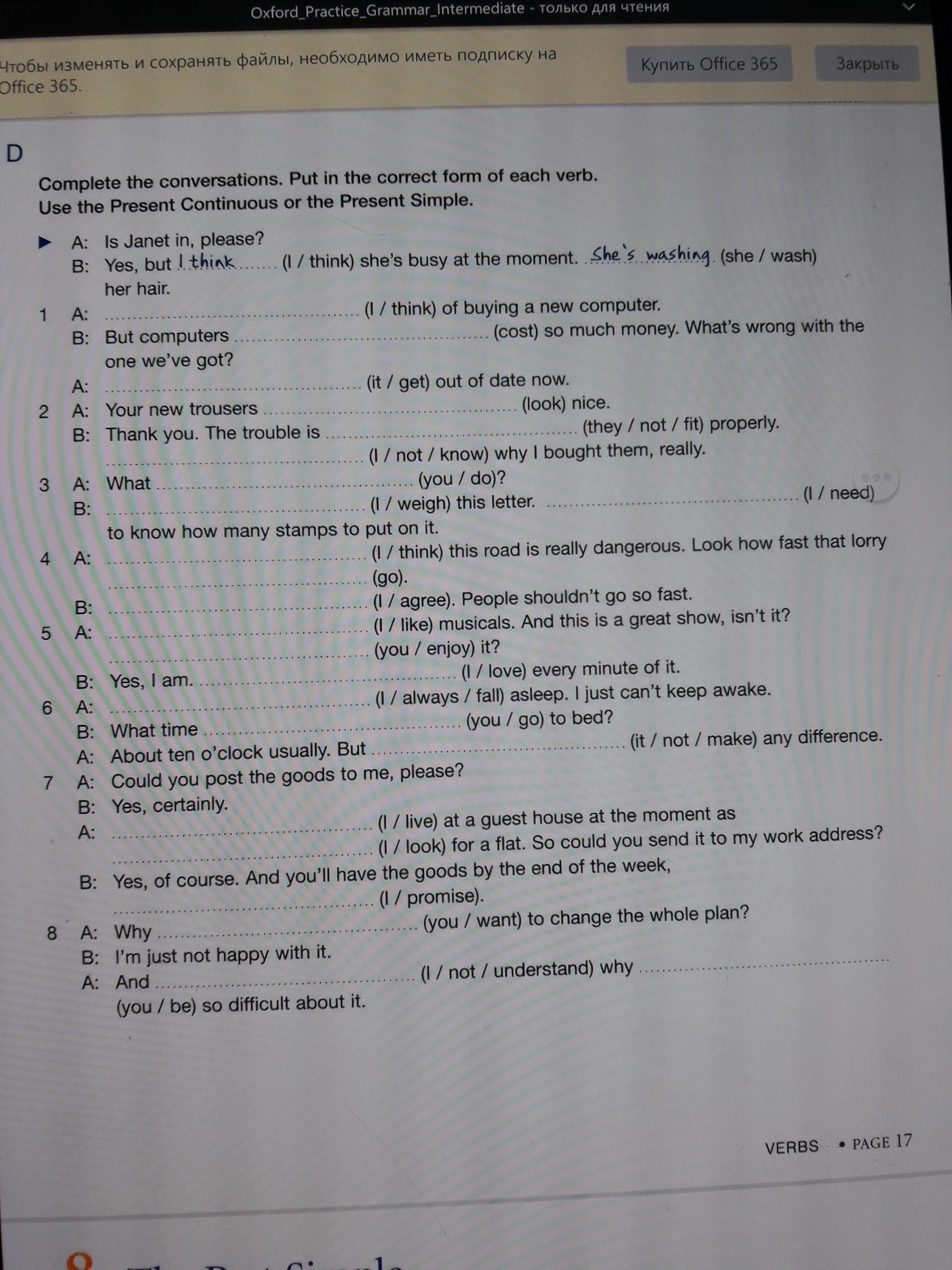
1) A: I'm thinking of buying a new computer.
B: But computers cost so much money. What's wrong with the one we've got?
A: it's getting out of date now.
2) A: Your new trousers look nice.
B: Thank you. The trouble is they don't fit properly. I don't know why I bought them, really.
3) A: What are you doing?
B: I'm weighing this letter. I need to know how many stamps to put on it.
4) A: I think this road is really dangerous. Look how fast that lorry is going.
B: I agree. People shouldn't go so fast.
5) A: I like musicals. And this is a great show, isn't it? Are you enjoying it?
B: Yes, I am. I love every minute of it.
6) A: I always fall asleep. I just can't keep awake.
B: What time do you go to bed?
A: About ten o'clock usually. But it doesn't make any difference.
7) A: Could you post the goods to me, please?
B: Yes, certainly.
A: I live at a guest house at the moment as I'm looking for a flat. So could you send it to my work address?
B: Yes, of course. And you'll have the goods by the end of the week I promise.
8) A: Why do you want to change the whole plan?
B: I'm just not happy with it
A: And I don't understand why you are so difficult about it.
B: But computers cost so much money. What's wrong with the one we've got?
A: it's getting out of date now.
2) A: Your new trousers look nice.
B: Thank you. The trouble is they don't fit properly. I don't know why I bought them, really.
3) A: What are you doing?
B: I'm weighing this letter. I need to know how many stamps to put on it.
4) A: I think this road is really dangerous. Look how fast that lorry is going.
B: I agree. People shouldn't go so fast.
5) A: I like musicals. And this is a great show, isn't it? Are you enjoying it?
B: Yes, I am. I love every minute of it.
6) A: I always fall asleep. I just can't keep awake.
B: What time do you go to bed?
A: About ten o'clock usually. But it doesn't make any difference.
7) A: Could you post the goods to me, please?
B: Yes, certainly.
A: I live at a guest house at the moment as I'm looking for a flat. So could you send it to my work address?
B: Yes, of course. And you'll have the goods by the end of the week I promise.
8) A: Why do you want to change the whole plan?
B: I'm just not happy with it
A: And I don't understand why you are so difficult about it.
09765467:
Спасибо огромное!)
You're welcome! Обращайся)
Похожие вопросы
Предмет: Литература,
автор: kirsi49
Предмет: Химия,
автор: hwhhwh663728
Предмет: Английский язык,
автор: mmoysenovich
Предмет: Математика,
автор: Фатима0511
Предмет: Математика,
автор: digital82