Предмет: Английский язык, автор: moonMia

помогитееееееееееееееееене

Приложения:
Ответы

Автор ответа: рома395
0
в чём.......................
Автор ответа: cappol
1
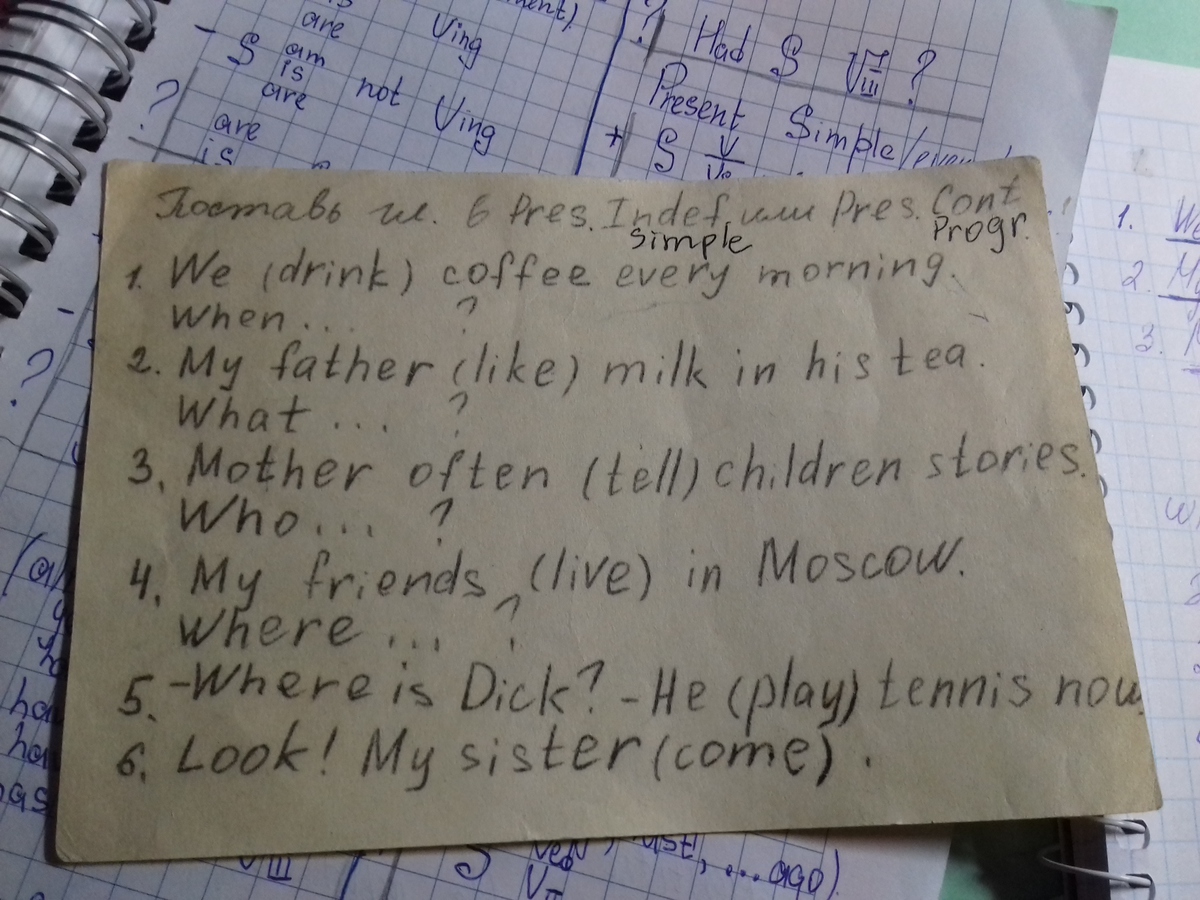
1. We drink. When do we drink coffee ? 2. My father likes. What does my father like? 3. Tells. Who often tells children stories? 4. Live. Where do my friends live? 5. Is playing 6. Is coming
Похожие вопросы
Предмет: Немецкий язык, автор: ввцуаму
Предмет: Английский язык, автор: reter5788
Прочитайте и письменно переведите текст № 2.
Текст № 2
There are three separate systems of law in the United Kingdom: the legal systems of law courts of 1. England and Wales; 2. Scotland; 3. Northern Ireland. However, there are some common features to all systems in the United Kingdom: the sources of law, the distinction between civil law and criminal law. The sources of law include: 1. Written law (i.e. statutes (i.e. statutes); 2. Unwritten law (i.e. Common law and Equity) based on judicial precedent. We also call the common law as “case law” or “judge made” law. It means that when one judge had decided a point of law, any judge who has the similar set of facts must decide case in the same way as in the earlier judgement. In other words, the judge uses the process of analogy. Any it is in this way that the generations of judges have built up the Common law. The structure of courts in England and Wales looks like this.
It is the Magistrates’ Courts (sometimes called police courts) that try the majority of all criminal cases and some civil cases. Magistrates’ Courts are presided over by lay magistrates (also called justices of the peace – J.P. s) who work part-time and are unpaid. The courts consists of between 2 and 7 magistrates. In a few large cities there are also stipendiary magistrates who sit alone and have legal training. County courts are the main civil courts and the Crown Court deals with all the more serious criminal cases. It also hears appeals from magistrates’ courts. The accused has the right to trial by jury. There is the Central Criminal Court in London (the old Bailey). The High Court hears all those civil cases that cannot be decided by county courts. The Court of Appeal hears both criminal and civil appeals and the House of Lords is the final appelate tribunal. The judges in the House of Lords is the ten “Lords of Appeal in Ordinary” (the “law lords”).